A vendor that was clean on the day you onboarded it may not be clean today. GST registrations get cancelled. Companies get struck off. Directors change. Lawsuits get filed.
That is why vendor risk management is a continuous job, not a one-time check. Yet only 8% of enterprises manage supplier compliance proactively, according to State of Flux.
For Indian enterprises, the stakes are specific. A supplier who stops filing GST returns can put your input tax credit at risk. A struck-off vendor can turn into an audit finding.
This guide compares five platforms Indian enterprises use to monitor vendor risk in 2026. Some are built for Indian statutory data. Others are global third-party risk platforms.
TL;DR
- NimbleS2P leads for enterprises that want vendor risk monitoring built into their procurement and AP workflow, with 24/7 compliance monitoring and predictive supplier alerts.
- IDfy is the strongest India-native verification player for ongoing MCA, litigation, sanctions and adverse media alerts.
- Zycus Supplier Risk Management suits global enterprises that want risk inside a full source-to-pay suite.
- OneTrust Third-Party Risk Management fits security and privacy teams running questionnaire-based assessments.
- Probe42 is a deep Indian company-data source for credit, legal and financial checks.
A note on scope: this guide covers ongoing risk after a vendor is onboarded. For checks before onboarding, see our guide to the best supplier due diligence platforms in India.
How We Evaluated These Platforms
We scored each platform on six criteria for Indian vendor risk:
- Indian statutory coverage: GST registration and filing status, MCA status, PAN and MSME data
- Global risk coverage: sanctions, PEP, adverse media, litigation, financial health, ESG and cyber
- Continuous monitoring: how often data refreshes, and whether alerts fire on change
- Risk scoring: a clear score per vendor that explains what drives it
- Action and remediation: blocking risky vendors, routing reviews and logging decisions
- Fit with procurement and AP: whether risk signals reach the people who raise POs and pay invoices
Note: All figures come from each vendor’s public website as of October 2026. Where a capability is not published, we say so.
Quick Comparison: Best Vendor Risk Management Software in India
| Platform | Best for | Indian statutory data | Global risk data | Monitoring and alerts | Pricing |
|---|---|---|---|---|---|
| NimbleS2P | Risk built into procurement and AP | Tax ID, entity, registration checks via G2B APIs | Sanctions, PEP, blacklists | 24/7 compliance monitoring, predictive alerts | Quote-based |
| IDfy | India-native ongoing verification | MCA, GST, Udyam, court records | Sanctions (360+ programmes), PEP, adverse media | Daily refreshes, real-time alerts | Quote-based |
| Zycus SRM | Global source-to-pay suite buyers | Not named | Financial, ESG, cyber, OFAC/PEP via partners | Continuous monitoring | Not published |
| OneTrust TPRM | Security and privacy assessments | Not named | Cyber, financial and compliance via Exchange | Change detection, score-change alerts | Quote-based |
| Probe42 | Indian company data and credit checks | MCA, GST, EPFO, litigation, credit ratings | Not covered | Ongoing monitoring (not detailed) | Free trial, then pay as you go |
Pro tip: Ask each vendor how quickly you would hear about a supplier’s GST cancellation. The answer tells you how continuous the monitoring really is.
1. NimbleS2P: Best Overall for Vendor Risk Inside Procurement and AP
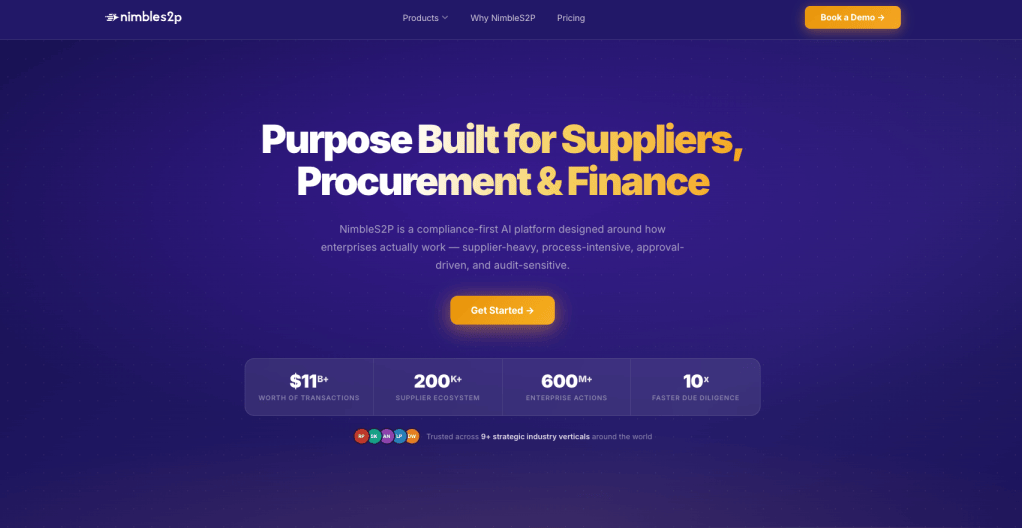
Most vendor risk tools sit apart from the systems that raise POs and pay invoices. NimbleS2P puts risk where the money moves.
The same platform that onboards a supplier keeps checking it, flags changes, and holds risky invoices before payment.
Verification at Onboarding
Every vendor runs through five checks via G2B APIs in under five seconds: tax identification, entity verification, business registration, sanctions and PEP screening, and blacklist and debarment checks.
Continuous Monitoring After Onboarding
Compliance is monitored 24/7, not once a year. The Compliance Agent tracks documents, expiries and supplier data, and the Anomaly Detection agent spots fraud signals and duplicates.
Supplier Risk Analytics
The Supplier Analytics module adds predictive alerts and multi-dimensional risk views across exposure, compliance and performance. Three AI agents handle reporting, compliance follow-ups and supplier insights.
Published outcomes include:
- 40% faster supplier risk identification
- 25% lower supplier compliance exposure
- 60% less manual reporting effort
- 3x faster executive insight generation
Security is SOC 2 Type II and ISO 27001 certified.
Pricing
Quote-based, scoped by module and volume. Book a demo.
Best For
Indian enterprises that want supplier risk signals to reach procurement and AP teams, not sit in a separate risk tool.
Pros
- Risk checks connected to onboarding, invoices and payments
- Indian statutory checks plus sanctions, PEP and blacklists
- AI agents for follow-ups and reporting
- One platform instead of a separate risk tool
Cons
- Supplier Analytics is currently marked Beta on the site
- Cyber and ESG questionnaires are not its focus
- No public pricing
2. IDfy: Best India-Native Tool for Ongoing Vendor Verification
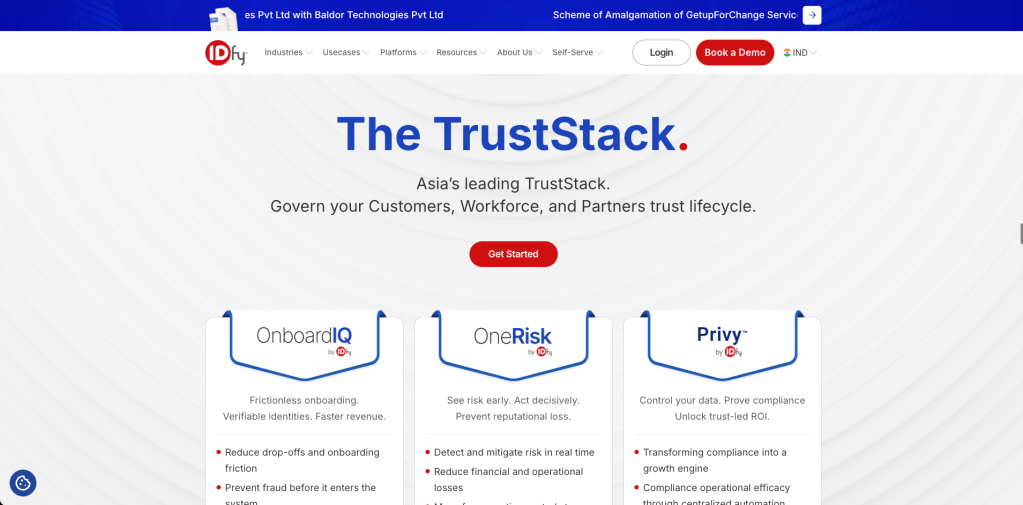
IDfy is a Mumbai-based verification company founded in 2011. It is best known for KYC and business verification, and now offers ongoing monitoring of businesses after onboarding.
Key Capabilities
- Indian data: MCA, GST, FSSAI and Udyam checks, plus court records and litigation flags
- Global screening: sanctions across 360+ programmes in 75+ countries, PEP data for 200+ countries, and adverse media from 20+ sources
- Monitoring: daily refreshes of legal, financial and reputational signals, with real-time alerts on new hits
- Director watchlists: triggers when linked directors appear in new records
- Risk scoring: risk-tiered scores with an audit trail, powered by its OneRisk platform
IDfy says it runs 70M+ verifications a month for 500+ clients. It is ISO 27001 and SOC 2 Type 2 certified.
Pricing
Quote-based.
Best For
Risk and compliance teams that need continuous Indian business verification with global screening.
Pros
- Strongest published India monitoring among specialist tools
- Daily refreshes and real-time alerts
- Recognised security certifications
Cons
- No supplier questionnaires, ESG or cyber ratings
- No procurement or ERP integrations described
- Positioning leans towards fintech and merchant onboarding
3. Zycus Supplier Risk Management: Best for Global Suite Buyers
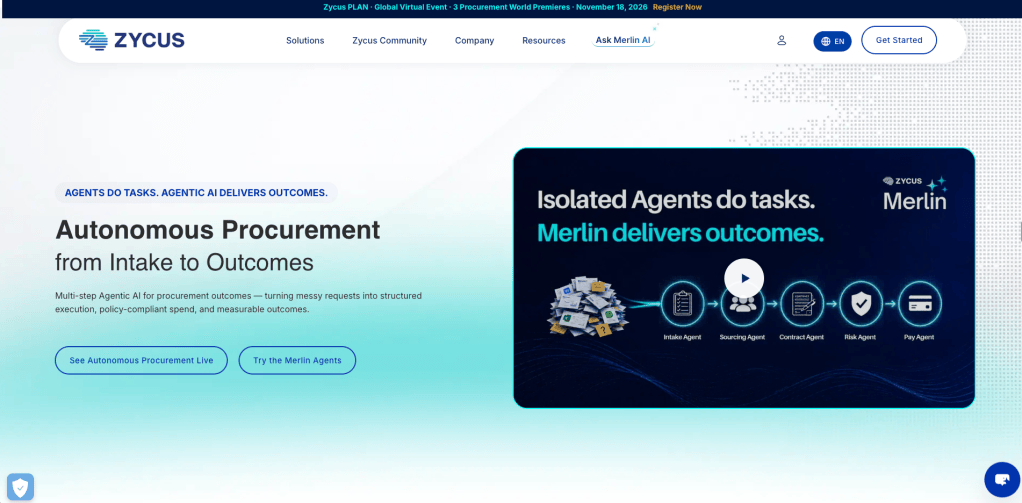
Zycus is an Indian-founded source-to-pay suite with offices in Mumbai and Bengaluru. It was named a Leader in the 2026 Gartner Magic Quadrant for Source-to-Pay Suites.
Key Capabilities
- Risk areas: financial, legal, ESG, performance, OFAC and PEP, cyber, geopolitical and news sentiment
- Data partners: D&B, BitSight, EcoVadis, RapidRatings, Moody’s and BvD
- Scoring: overall, category and composite scores, with industry benchmarks
- Workflows: automatic assessments when a supplier is created or edited, and automatic blocking of high-risk POs
- Remediation: corrective action requests and supplier development plans
- ERP: SAP, Oracle and NetSuite
Zycus holds a 4.6 rating from 173 reviews on Gartner Peer Insights.
Pricing
Not published.
Best For
Global enterprises with a large supplier base that are buying a full source-to-pay suite.
Pros
- Broad global risk coverage through premium data partners
- Blocks risky POs automatically
- Strong analyst recognition
Cons
- No Indian statutory checks such as GST or MCA named
- Sold as part of a larger suite
- Depends on third-party data subscriptions
4. OneTrust Third-Party Risk Management: Best for Security and Privacy Assessments
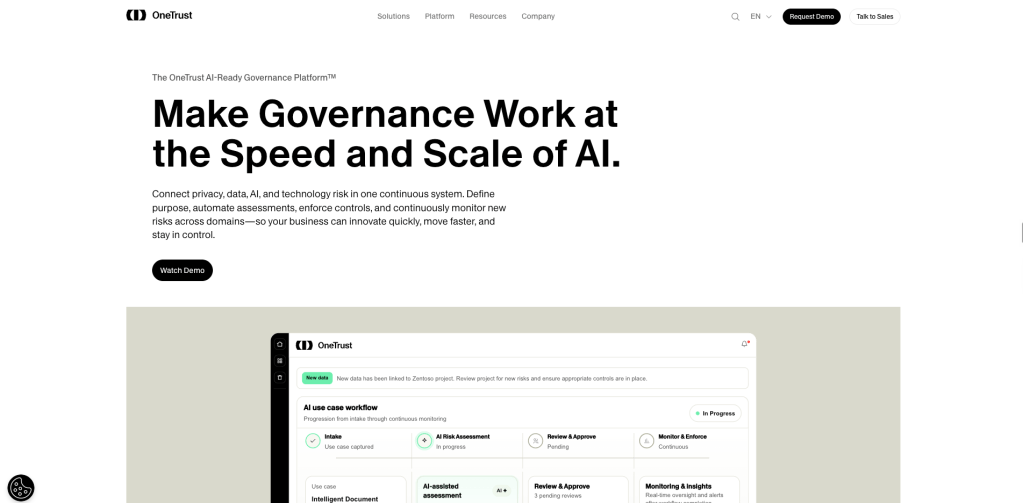
OneTrust is an Atlanta-based governance platform with a hub in Bengaluru. It was named a Leader in the 2026 Gartner Magic Quadrant for Third-Party Risk Management Tools.
Key Capabilities
- Assessments: questionnaires mapped to 50+ built-in control frameworks
- Third-Party Risk Exchange: pre-completed assessments for thousands of vendors, plus SecurityScorecard, RiskRecon and other data
- Monitoring: real-time change detection and alerts when a vendor’s risk score changes
- Workflows: a workflow builder, automatic risk assignment and mitigation recommendations
OneTrust says AI document scanning can cut assessment time by up to 65%.
Pricing
Quote-based.
Best For
InfoSec, privacy and DPDP Act teams that need structured questionnaires for IT and data processors.
Pros
- Deep framework library for security and privacy reviews
- Shared assessments save vendor time
- Strong analyst recognition
Cons
- No Indian statutory data such as GST or MCA
- No sanctions or adverse media screening described
- Built for risk teams more than procurement and AP
5. Probe42: Best for Indian Company Data and Credit Checks
Probe42 is an Indian business intelligence company backed by Accel. It is best used as a data source for deep checks on Indian companies.
Key Capabilities
- Company data: status, directors and their other directorships, charges, shareholding and group companies
- Financials: financial statements, ratios and credit ratings
- Compliance signals: GST data and EPFO payment delays
- Legal: litigation records
- Access: web platform and API
Probe42 says 9 of India’s 10 premier banks use its data.
Pricing
A free trial covers 3 companies, then pay as you go.
Best For
Finance and credit teams that need detailed financial and legal profiles of Indian suppliers.
Pros
- Deep Indian company and financial data
- Low-cost way to start
- API access for building your own checks
Cons
- No risk scores, alerts or workflows described
- No sanctions, PEP, ESG or cyber coverage
- A data layer, not a full vendor risk platform
The India Vendor Risk Checklist
These are the risks Indian enterprises most often miss between onboarding and payment:
- GST registration cancelled or suspended: puts your input tax credit at risk
- GST returns not filed: supplier invoices may not reach your GSTR-2B
- Company struck off or under liquidation: checked through MCA records
- Director changes: new directors linked to other risky entities
- Litigation and insolvency: new court cases or IBC proceedings
- Sanctions, PEP and adverse media: essential for exporters and regulated sectors
- Expired documents: certificates, licences and MSME declarations
- Bank account changes: a common sign of payment fraud
How to Choose the Right Vendor Risk Management Software
Step 1: Decide Which Risks Matter Most
Split your risks into statutory, financial, legal, reputational and cyber. Most tools are strong in one or two of these, not all five.
Step 2: Segment Your Vendors
Not every vendor needs the same depth. Monitor critical and high-spend vendors daily, and the rest on a lighter cycle.
Step 3: Match the Tool to Your Team
- Risk signals inside procurement and AP: NimbleS2P
- India-native business verification and alerts: IDfy
- Global risk inside a source-to-pay suite: Zycus
- Security and privacy questionnaires: OneTrust
- Deep Indian company and credit data: Probe42
Step 4: Check What Happens After an Alert
An alert is only useful if someone acts on it. Confirm the tool can hold payments, block POs or route a review.
Step 5: Test With Your Own Vendors
Run 20 of your current vendors through each tool. Compare what each one finds that you did not already know.
Frequently Asked Questions
What is vendor risk management software?
Vendor risk management software continuously checks your suppliers for statutory, financial, legal, reputational and security risks. It scores each vendor and alerts you when something changes.
How is vendor risk management different from due diligence?
Due diligence checks a vendor before onboarding. Vendor risk management keeps checking after onboarding, for as long as you work with the vendor.
Which vendor risks matter most in India?
GST registration and filing status, MCA company status, litigation, MSME status and bank account changes. Sanctions and PEP screening matter for exporters and regulated sectors.
How often should vendor risk be reviewed?
Critical vendors should be monitored continuously, with alerts on change. Lower-risk vendors can be reviewed quarterly or yearly.
Does vendor risk management help with GST compliance?
Yes. Spotting a supplier’s GST cancellation or missed filings early helps you protect input tax credit before invoices are paid.
Conclusion
Vendor risk does not stand still, so your checks cannot either. The best vendor risk management software in India catches changes early and gets them to the people who can act.
IDfy, Zycus, OneTrust and Probe42 each serve a clear need, from Indian verification data to global security assessments.
For enterprises that want risk monitoring built into onboarding, procurement and payments, NimbleS2P leads this list.
Want to see supplier risk flagged before an invoice gets paid? Book a NimbleS2P demo.


Leave a Reply